Posted on Leave a comment

What Do Glock Switches Do? A Technical Breakdown of Function and Law

What Do Glock Switches Do? A Technical Breakdown of Function and Law

What Do Glock Switches Do? A Technical Breakdown of Function and Law

You’ve seen the videos: a Glock pistol firing at a cyclic rate that rivals a submachine gun. That’s the work of a Glock switch, a small, aftermarket device that fundamentally alters the firearm’s firing mechanism. Specifically, it converts a standard semi-automatic Glock pistol into a fully automatic weapon, allowing it to fire multiple rounds with a single, continuous pull of the trigger until the magazine is empty. This isn’t a modification for the range; it’s a conversion that changes the legal definition of the firearm and carries severe federal penalties. Understanding what these devices do, beyond the Hollywood hype, is critical for any serious firearms enthusiast.

The Mechanical Reality: Converting Semi-Auto to Full-Auto

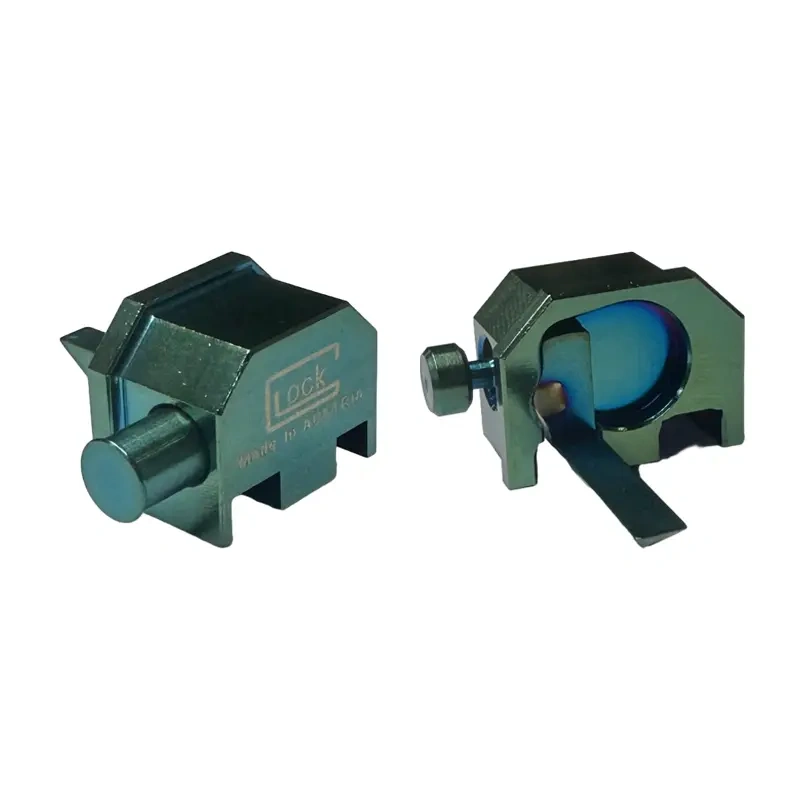
A Glock switch, often called an auto sear or selector switch, is a machined component, typically made from aluminum or steel, that replaces the factory rear plate on your Glock slide. Its function is purely mechanical. When installed, it introduces a secondary sear or lever that interacts with the pistol’s trigger bar and firing pin safety. As the slide reciprocates after firing a round, this secondary sear catches the striker, holding it in a partially cocked position. The continued rearward pressure of your finger on the trigger then releases this sear, allowing the striker to fall and fire the next round. This “bump-fire” cycle repeats as long as there is ammunition and the trigger is held down. The rate of fire for a Glock 17 or 19 with a switch can exceed 1,200 rounds per minute, emptying a standard 17-round magazine in under a second. It’s a dramatic, and legally consequential, mechanical alteration.

Legal Status: The National Firearms Act and Machine Guns

Under the National Firearms Act (NFA) of 1934 and the subsequent Firearm Owners’ Protection Act of 1986, a machine gun is defined as any weapon which shoots, is designed to shoot, or can be readily restored to shoot, automatically more than one shot, without manual reloading, by a single function of the trigger. A Glock switch meets this definition as a “machinegun” by itself, regardless of whether it’s installed on a firearm. Mere possession of the device is a federal felony punishable by up to 10 years in prison and $250,000 in fines. There is no “gray area.” The Bureau of Alcohol, Tobacco, Firearms and Explosives (ATF) classifies these devices strictly, and prosecutions are aggressive. This is why reputable vendors like Usaglockswitch operate with absolute transparency regarding the legal framework surrounding these items for educational and historical collection purposes only, within the confines of the law.

Performance and Practical Implications

While the high rate of fire seems impressive in short clips, the practical implications are largely negative for controlled shooting. Accuracy beyond the first round is nearly impossible due to extreme muzzle climb and the incredibly short time between shots. The pistol will experience accelerated wear, with increased stress on the slide, frame, and locking block. Magazine changes become constant, and ammunition expenditure is financially prohibitive. For example, a single 2-second burst from a Glock 18C-style conversion can consume $50 worth of 9mm ammunition. This makes the device impractical for any legitimate defensive or sporting use. Its primary effect is to create an uncontrollable, indiscriminate spray of bullets, which is precisely why its manufacture and transfer to civilians was banned in 1986.

Historical Context and Collector Items

It’s important to distinguish between post-1986 conversion devices and pre-1986 registered transferable machine guns. Factory-made, fully-automatic Glocks, like the select-fire Glock 18, are extremely rare and legally transferable only to entities with a Special Occupational Tax (SOT) license or on the pre-1986 registry, often commanding prices over $30,000. The aftermarket switches discussed here are modern reproductions. For Class 3 SOTs, manufacturers, and serious collectors of historical firearm mechanisms, understanding the design and function of these devices is part of the trade. Companies like Usaglockswitch provide detailed technical specifications and inert display models for this educational and professional market, ensuring all transactions are compliant with federal and state regulations.

Safety and Responsibility

Handling any NFA item, including a registered machine gun, requires extensive training and a paramount focus on safety. The risks with an illegally converted firearm are exponentially higher. The mechanical forces involved can lead to catastrophic out-of-battery discharges if the device is poorly machined or installed incorrectly. The sheer volume of fire presents an immense danger to bystanders and a loss of all positive weapon control. Responsible firearm ownership is built on precision, accountability, and strict adherence to the law. Engaging with the technical knowledge of how these systems work is valid; pursuing illegal conversion is not. For those interested in the engineering behind firearm actions, we recommend studying historically significant display items and the approved legal processes for NFA ownership.

What do Glock switches do?

A Glock switch is an aftermarket device that mechanically converts a semi-automatic Glock pistol into a fully automatic machine gun. It alters the firing mechanism to allow the weapon to discharge multiple rounds with a single, continuous pull of the trigger until the magazine is empty.

Why are Glock switches illegal?

Glock switches are classified as “machineguns” under the National Firearms Act. Their manufacture and transfer to civilians have been prohibited since the Firearm Owners’ Protection Act of 1986. Unlicensed possession is a federal felony.

What is a Glock with a switch?

A Glock with a switch refers to a Glock pistol that has been illegally modified with an auto sear device. This converted firearm is legally defined as a machine gun, regardless of its original configuration, and is subject to all NFA restrictions and penalties.

For qualified professionals and collectors operating within full legal compliance, detailed technical resources and historical references are available. Browse our glock switches collection of informational and display-oriented products to further your understanding of these mechanical systems.

Last updated: March 27, 2026
Posted on Leave a comment

The Legal State of Glock Switches: A State-by-State Breakdown

The Legal State of Glock Switches: A State-by-State Breakdown

The Legal State of Glock Switches: A State-by-State Breakdown

As of March 2026, possessing a Glock switch—a device that converts a semi-automatic pistol into a fully automatic machine gun—is a federal felony under the National Firearms Act (NFA) of 1934, punishable by up to 10 years in prison and a $250,000 fine. There is no state where these devices are legal for civilian ownership without a specific, and exceptionally rare, federal license. The question isn’t “what state is Glock switches legal,” but rather understanding the uniform federal prohibition and the severe penalties that exist in every jurisdiction.

Federal Law is Absolute: The NFA and Machine Gun Definition

The 1934 National Firearms Act defines a “machinegun” as any weapon which shoots, is designed to shoot, or can be readily restored to shoot, automatically more than one shot, without manual reloading, by a single function of the trigger. This includes any part designed and intended solely and exclusively for converting a weapon into a machinegun. A Glock switch, also known as an auto-sear or selector switch, meets this definition precisely. The Bureau of Alcohol, Tobacco, Firearms and Explosives (ATF) classifies these devices as machine guns themselves, regardless of whether they are installed. This federal statute supersedes any state law. Even if a state has no specific statute mentioning “Glock switches,” you are still in violation of federal law the moment you take possession of one.

State-Level Enforcement and “Preemption” Laws

While federal law is the primary hammer, many states have enacted their own laws that mirror or even enhance the federal penalties for possession of machine guns or conversion devices. States like California, New York, New Jersey, and Illinois have notoriously strict weapons laws that add state-level charges on top of federal ones. Conversely, some states have “preemption” laws that prevent local municipalities from enacting firearms ordinances stricter than state law, but this does not nullify federal statutes. The key takeaway is that state laws can only add more restrictions and harsher penalties; they cannot legalize what federal law forbids. Prosecution can occur at either the federal or state level, often depending on which agency makes the arrest and the specific circumstances of the case.

The Myth of “Grey Market” or “Pre-1986” Switches

A dangerous misconception circulates online suggesting that if a switch was manufactured before the May 19, 1986, cutoff of the Firearm Owners’ Protection Act (FOPA), it could be legally registered. This is almost universally false for Glock switches. The Glock pistol platform itself wasn’t even introduced to the U.S. market until the mid-1980s, and factory full-auto variants like the Glock 18 were never available to civilians. Therefore, there is no legally transferable, pre-1986 registered “drop-in auto sear” (DIAS) for a Glock pistol in the National Firearms Registration and Transfer Record (NFRTR). Any vendor claiming to sell a “legal” or “pre-ban” Glock switch is engaging in fraud and you will be purchasing a felony.

Legal Alternatives: What You Can Actually Own

For enthusiasts seeking an enhanced shooting experience without committing a federal crime, several legal alternatives exist. These include binary triggers, which fire one round on the pull and one on the release of the trigger, and forced reset triggers (FRTs), though the ATF has classified many FRT models as machine guns. Your safest bet is to stick with well-known, legally-vetted performance upgrades. For example, a high-quality aftermarket connector paired with a reduced-power safety plunger spring from a reputable shop like Usaglockswitch can provide a cleaner, lighter trigger pull within the bounds of the law. We stock vetted components like the Ghost Inc. 3.5lb Connector and OEM-style parts that improve function without crossing legal lines.

Consequences of Possession: More Than Just a Charge

The repercussions of getting caught with a Glock switch are catastrophic and permanent. Beyond the prison time and fines, you will be a convicted felon. This means the permanent loss of your right to own *any* firearms, voting rights (in many states), difficulty securing employment, and the loss of professional licenses. The ATF and prosecutors are aggressively pursuing these cases, especially with the rise of illegal manufacturing via 3D printing. They are not interested in “it was just for fun” or “I didn’t install it” defenses. Mere possession is the crime. It’s a life-altering mistake that far outweighs any momentary thrill.

Frequently Asked Questions

What state is Glock switches legal?

No state permits the civilian possession of Glock switches. They are federally prohibited as machine guns under the National Firearms Act (NFA). State laws can only add additional penalties, not override this federal ban.

What country is Glock switch legal?

Some countries with permissive firearms laws may allow licensed ownership of automatic weapons, which could include Glock switches. However, in the United States, they are strictly illegal for civilians without a Special Occupational Tax (SOT) license, which is nearly impossible for an individual to obtain.

Where are Glock switches legal?

For the average U.S. citizen, Glock switches are legal nowhere. They may be possessed only by federally licensed manufacturers/dealers (FFL/SOTs), law enforcement agencies, or military entities. Civilian ownership is a federal felony in all 50 states.

Focus on building a reliable, high-performance firearm within the full bounds of the law. For all your legal Glock parts, accessories, and upgrades, browse our glock switches collection at Usaglockswitch, where we provide top-tier components and clear information to responsible owners.

Last updated: March 27, 2026

Posted on Leave a comment

What is a Glock Switch Used For? A Professional Breakdown

What is a Glock Switch Used For? A Professional Breakdown

What is a Glock Switch Used For? A Professional Breakdown

You’ve seen the videos: a Glock pistol firing at a cyclic rate of over 1,200 rounds per minute, emptying a standard magazine in under two seconds. That’s not a machine gun from the factory; it’s a standard semi-automatic Glock equipped with a small, aftermarket component called a switch. This device, technically a forced reset trigger or auto-sear, fundamentally alters the firearm’s function from one shot per trigger pull to fully automatic fire. At Usaglockswitch, we provide the components for enthusiasts and professionals who understand this platform inside and out.

The Core Function: Converting Semi-Auto to Full-Auto

A Glock switch is a replacement rear housing or an installed sear assembly that modifies the pistol’s fire control group. In a stock Glock 17, 19, or 26, the trigger must be fully released and pulled again to fire the next round. A switch, like the common “Giggle Switch” or “Auto Key Card” style devices, interrupts this reset. It forces the trigger forward and re-engages the firing mechanism while the shooter maintains rearward pressure, allowing for continuous fire. This converts your pistol into a machine pistol as defined by the National Firearms Act (NFA). The installation typically requires specific tools and a detailed understanding of the firearm’s internals; it’s not a drop-in part for the uninitiated.

Primary Applications: Beyond the Range Toy

While the dramatic rate of fire is often showcased on social media, the practical applications are specific and demand high skill. For trained individuals, the primary use is controlled, suppressive fire in defensive or tactical scenarios where overwhelming immediate firepower is a calculated necessity. It turns a compact sidearm into a close-quarters battle (CQB) powerhouse. However, this comes with significant trade-offs: extreme ammunition consumption, rapid barrel heating, and drastically reduced accuracy in sustained fire. These are not tools for plinking; they are specialized components for a specific purpose. Professionals sourcing from Usaglockswitch understand these parameters and the critical importance of proper mounting systems and ammunition selection.

Technical Considerations and Compatibility

Not all switches are created equal, and compatibility is paramount. Most common switches are designed for the ubiquitous Gen 3 Glock platform in 9mm (like the G17, G19, G26). They interface with the specific geometry of the trigger mechanism housing. Using one on an incompatible model, such as a Gen 5 or a .40 caliber Glock 22, will not function and may cause damage. Furthermore, the quality of the milling and the hardness of the metal are critical for reliability and safety. A poorly machined sear can lead to a runaway gun or a catastrophic failure. That’s why we vet the products in our Glock Switches category, focusing on components known for precise tolerances.

Legal Reality and Responsible Ownership

It is impossible to discuss the use of a Glock switch without addressing the legal framework. Under federal law, specifically the National Firearms Act of 1934 and the Firearm Owners’ Protection Act of 1986, a device designed to convert a semi-automatic weapon into a machine gun is considered a “machinegun” itself. Mere possession of such a device, without being registered with the ATF and the payment of a $200 tax stamp, is a felony punishable by up to 10 years in prison. This applies regardless of whether it is installed on a firearm. Responsible enthusiasts who pursue this path do so through the legal Form 1 process to manufacture and register an NFA item. Ignorance of this law is not a defense.

Product Ecosystem: Triggers, Selectors, and Accessories

Operating a converted platform effectively requires supporting gear. A standard polymer frame is not designed for sustained automatic fire. We recommend pairing your build with a durable aftermarket frame or chassis, like those from Flux Defense or a CAA Micro Roni, which provide a more stable platform and often include a stock. Upgraded, heavy-duty recoil spring assemblies are also essential to handle the increased cyclic rate. For those building a legal registered machine gun, a selector switch assembly or a dedicated forced reset trigger (FRT) system can offer more control than a simple auto-sear. You can explore these supporting components when you browse our full catalog to build a complete and reliable system.

What is a Glock switch used for?

A Glock switch is a device used to convert a semi-automatic Glock pistol into a fully automatic machine pistol. It modifies the fire control group to allow continuous firing with a single, sustained pull of the trigger, drastically increasing the rate of fire for specialized tactical or defensive applications.

Why are Glock switches illegal?

Glock switches are illegal for civilian possession without proper registration because they are classified as “machineguns” under the National Firearms Act. Unregistered possession is a federal felony. They are only legal if registered with the ATF prior to May 1986 or if an individual files a Form 1, pays a $200 tax, and receives ATF approval to manufacture one.

Understanding the function, application, and serious legal implications of a Glock switch is essential for any serious firearms enthusiast. This is a platform for knowledgeable builders operating within the bounds of federal law. For components that meet a professional standard, browse our Glock switches collection at Usaglockswitch.

Last updated: March 27, 2026