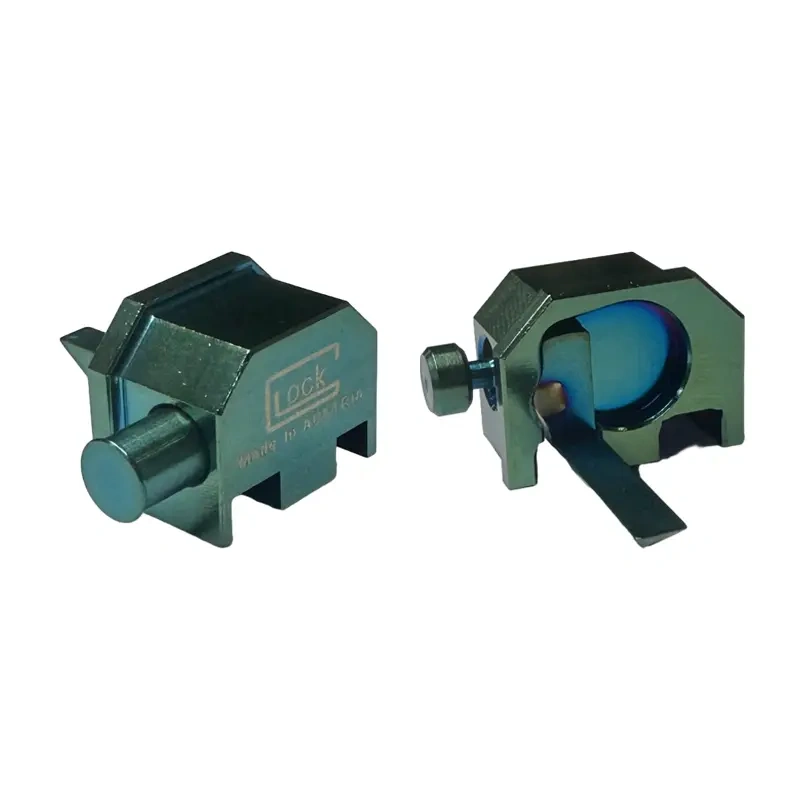
What is a Glock Switch Used For? A Professional Breakdown
You’ve seen the videos: a Glock pistol firing at a cyclic rate of over 1,200 rounds per minute, emptying a standard magazine in under two seconds. That’s not a machine gun from the factory; it’s a standard semi-automatic Glock equipped with a small, aftermarket component called a switch. This device, technically a forced reset trigger or auto-sear, fundamentally alters the firearm’s function from one shot per trigger pull to fully automatic fire. At Usaglockswitch, we provide the components for enthusiasts and professionals who understand this platform inside and out.
The Core Function: Converting Semi-Auto to Full-Auto
A Glock switch is a replacement rear housing or an installed sear assembly that modifies the pistol’s fire control group. In a stock Glock 17, 19, or 26, the trigger must be fully released and pulled again to fire the next round. A switch, like the common “Giggle Switch” or “Auto Key Card” style devices, interrupts this reset. It forces the trigger forward and re-engages the firing mechanism while the shooter maintains rearward pressure, allowing for continuous fire. This converts your pistol into a machine pistol as defined by the National Firearms Act (NFA). The installation typically requires specific tools and a detailed understanding of the firearm’s internals; it’s not a drop-in part for the uninitiated.
Primary Applications: Beyond the Range Toy
While the dramatic rate of fire is often showcased on social media, the practical applications are specific and demand high skill. For trained individuals, the primary use is controlled, suppressive fire in defensive or tactical scenarios where overwhelming immediate firepower is a calculated necessity. It turns a compact sidearm into a close-quarters battle (CQB) powerhouse. However, this comes with significant trade-offs: extreme ammunition consumption, rapid barrel heating, and drastically reduced accuracy in sustained fire. These are not tools for plinking; they are specialized components for a specific purpose. Professionals sourcing from Usaglockswitch understand these parameters and the critical importance of proper mounting systems and ammunition selection.
Technical Considerations and Compatibility
Not all switches are created equal, and compatibility is paramount. Most common switches are designed for the ubiquitous Gen 3 Glock platform in 9mm (like the G17, G19, G26). They interface with the specific geometry of the trigger mechanism housing. Using one on an incompatible model, such as a Gen 5 or a .40 caliber Glock 22, will not function and may cause damage. Furthermore, the quality of the milling and the hardness of the metal are critical for reliability and safety. A poorly machined sear can lead to a runaway gun or a catastrophic failure. That’s why we vet the products in our Glock Switches category, focusing on components known for precise tolerances.
Legal Reality and Responsible Ownership
It is impossible to discuss the use of a Glock switch without addressing the legal framework. Under federal law, specifically the National Firearms Act of 1934 and the Firearm Owners’ Protection Act of 1986, a device designed to convert a semi-automatic weapon into a machine gun is considered a “machinegun” itself. Mere possession of such a device, without being registered with the ATF and the payment of a $200 tax stamp, is a felony punishable by up to 10 years in prison. This applies regardless of whether it is installed on a firearm. Responsible enthusiasts who pursue this path do so through the legal Form 1 process to manufacture and register an NFA item. Ignorance of this law is not a defense.
Product Ecosystem: Triggers, Selectors, and Accessories
Operating a converted platform effectively requires supporting gear. A standard polymer frame is not designed for sustained automatic fire. We recommend pairing your build with a durable aftermarket frame or chassis, like those from Flux Defense or a CAA Micro Roni, which provide a more stable platform and often include a stock. Upgraded, heavy-duty recoil spring assemblies are also essential to handle the increased cyclic rate. For those building a legal registered machine gun, a selector switch assembly or a dedicated forced reset trigger (FRT) system can offer more control than a simple auto-sear. You can explore these supporting components when you browse our full catalog to build a complete and reliable system.
What is a Glock switch used for?
A Glock switch is a device used to convert a semi-automatic Glock pistol into a fully automatic machine pistol. It modifies the fire control group to allow continuous firing with a single, sustained pull of the trigger, drastically increasing the rate of fire for specialized tactical or defensive applications.
Why are Glock switches illegal?
Glock switches are illegal for civilian possession without proper registration because they are classified as “machineguns” under the National Firearms Act. Unregistered possession is a federal felony. They are only legal if registered with the ATF prior to May 1986 or if an individual files a Form 1, pays a $200 tax, and receives ATF approval to manufacture one.
Understanding the function, application, and serious legal implications of a Glock switch is essential for any serious firearms enthusiast. This is a platform for knowledgeable builders operating within the bounds of federal law. For components that meet a professional standard, browse our Glock switches collection at Usaglockswitch.
Last updated: March 27, 2026